By Travis Real Estate
Moving to Lake Travis with pets is genuinely one of the better relocation scenarios for animal owners in the greater Austin area — the large lots, trail access, and open Hill Country terrain are a real upgrade from most urban neighborhoods. That said, the transition still takes planning, and there are a few things specific to this environment that are worth knowing before you arrive. We've helped a lot of families move to Lakeway, Rough Hollow, Spicewood, and Bee Cave over the years, and the ones who set their pets up best tend to do a handful of things right from the start.
Key Takeaways
- Update your pet's microchip registration and rabies documentation before the move, not after — the transition period is when most pets are most likely to bolt
- The Hill Country climate, wildlife, and lake access create conditions that differ meaningfully from urban Austin neighborhoods
- Lot size and fencing are as important as neighborhood when evaluating homes with pets in mind
- Most dogs and cats settle into a Lake Travis home within two to four weeks, especially when the new environment offers more space than where they came from
Get Your Pet's Paperwork in Order Before You Pack
One of the most skipped steps in any relocation with animals is updating documentation before the move. Travis County does not require pet licensing, but the City of Austin requires all dogs and cats over four months of age to have current rabies vaccinations. If you're moving from outside Texas, make sure those records are accessible from day one.
Update your pet's microchip registration to reflect the new Lake Travis address before the moving truck arrives, not after. This is a quick task that most owners defer, and it creates real risk during the transition period — the days immediately after a move are when animals are most disoriented and most likely to wander.
Update your pet's microchip registration to reflect the new Lake Travis address before the moving truck arrives, not after. This is a quick task that most owners defer, and it creates real risk during the transition period — the days immediately after a move are when animals are most disoriented and most likely to wander.
What to handle before moving day
- Microchip registration: update the address in the national registry — not just with your vet
- Vaccination records: make sure rabies is current and that you have a physical or digital copy accessible
- New vet: identify a veterinary clinic in the Lake Travis area before you move so you're not searching during a stressful first week
- Pre-move vet visit: if your pet is anxious, older, or has health conditions, ask your current vet about whether short-term anti-anxiety support makes sense for the drive or the first few nights
Moving Day: How to Reduce Stress for Your Animals
The best thing you can do for most pets on moving day is keep them away from it. Constant door traffic, unfamiliar people moving furniture, and disrupted routines spike anxiety in dogs and cats more reliably than almost anything else.
A quiet room in the current home, a carrier in a calm vehicle, or a stay with a trusted friend or a boarding facility keeps animals out of the chaos until the main event is over. If you are driving the animals yourself, a covered crate in a climate-controlled vehicle — not a cargo space — is the right setup for anything over two hours.
A quiet room in the current home, a carrier in a calm vehicle, or a stay with a trusted friend or a boarding facility keeps animals out of the chaos until the main event is over. If you are driving the animals yourself, a covered crate in a climate-controlled vehicle — not a cargo space — is the right setup for anything over two hours.
By species: what works best on moving day
- Dogs: crate or quiet room away from movers, short walks to relieve stress during breaks, familiar toy or blanket in the new home on arrival
- Cats: one-room introduction strategy on arrival — set up food, water, litter, and a familiar bed in a single room and let them expand their territory on their own timeline over the first week
- Small animals and birds: temperature stability is the priority — keep carriers away from direct sun, drafts, and loud environments during the drive
Hill Country-Specific Considerations for Pets
The Lake Travis environment has some conditions that are worth knowing about before you arrive, especially if you're relocating from a denser part of Austin.
Heat is the biggest adjustment for dogs during the summer months. The Hill Country terrain retains heat differently than shaded urban neighborhoods, and early morning and evening exercise schedules become genuinely necessary from May through September. Make sure your new yard has reliable shade and accessible water before your dog spends extended time outdoors.
Heat is the biggest adjustment for dogs during the summer months. The Hill Country terrain retains heat differently than shaded urban neighborhoods, and early morning and evening exercise schedules become genuinely necessary from May through September. Make sure your new yard has reliable shade and accessible water before your dog spends extended time outdoors.
What's different about this environment for animals
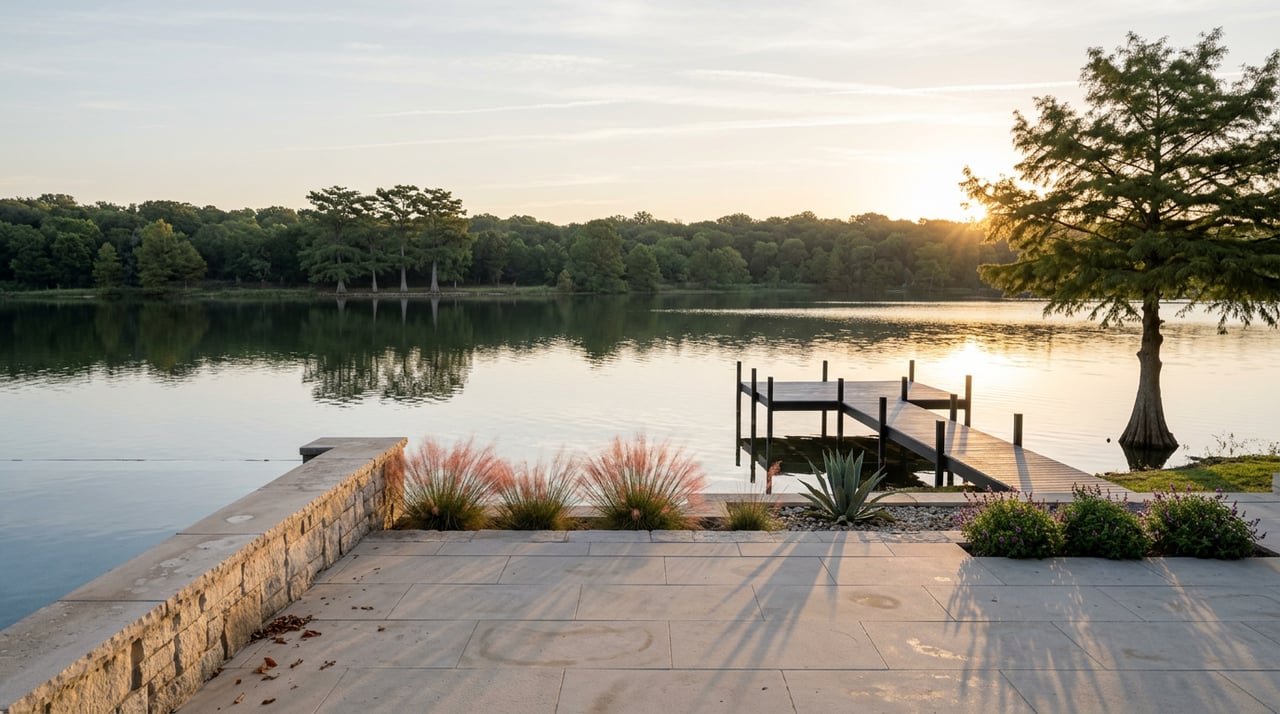
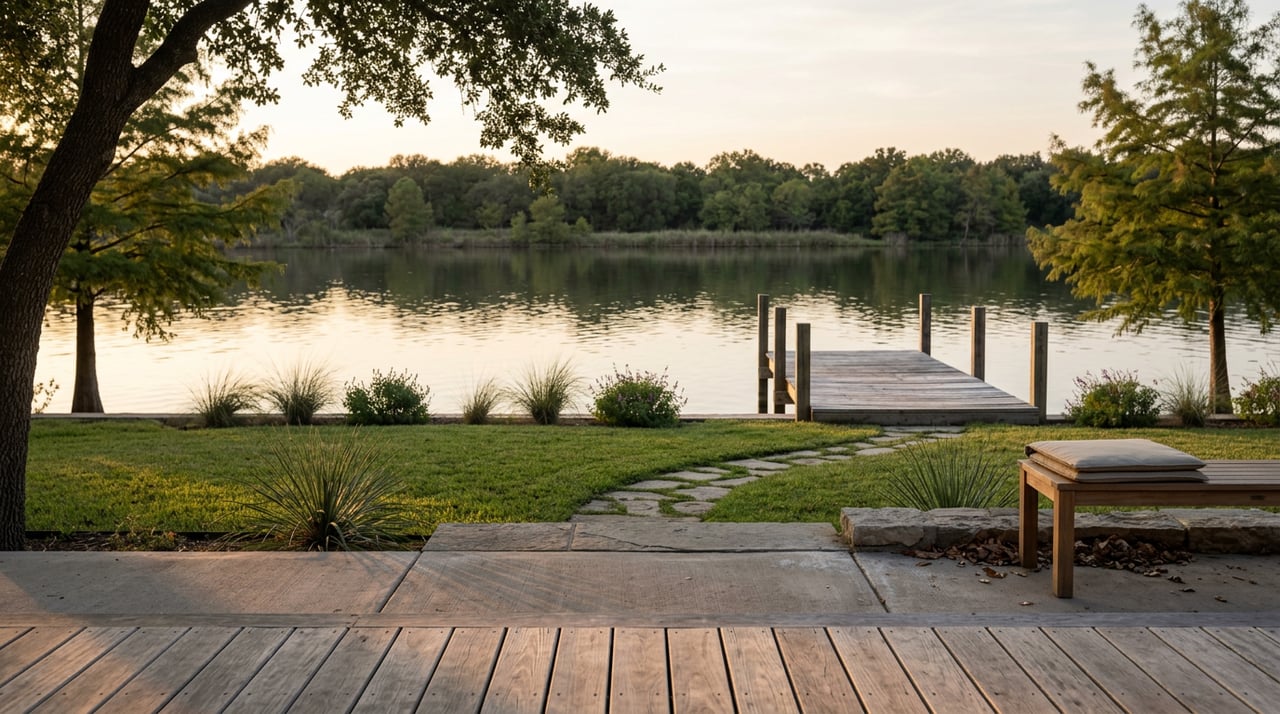
- Lake access: Lake Travis can produce cyanobacteria (blue-green algae) blooms during warm months — these are toxic to pets. Check current advisories before allowing dogs to swim in coves or areas with slow water movement
- Wildlife: deer, armadillos, foxes, and coyotes move through Lakeway, Spicewood, and Bee Cave regularly — supervise outdoor cats and make sure fencing is secure enough to contain dogs that might react to wildlife scent or movement
- Native plants: some Hill Country plants, including mountain laurel, are toxic if ingested — do a walk-through of your yard before giving dogs or outdoor cats unsupervised access
- Trail access: Muleshoe Bend Recreation Area along the Lake Travis shoreline offers nearly 10 miles of trails — one of the better daily exercise options for active dogs within a short drive of most neighborhoods in the area
What to Look for in a Home When You Have Pets
If you're still searching for your Lake Travis home, pet logistics are worth including in your evaluation alongside the standard checklist. A few features make a consistent difference in daily quality of life once you're living there.
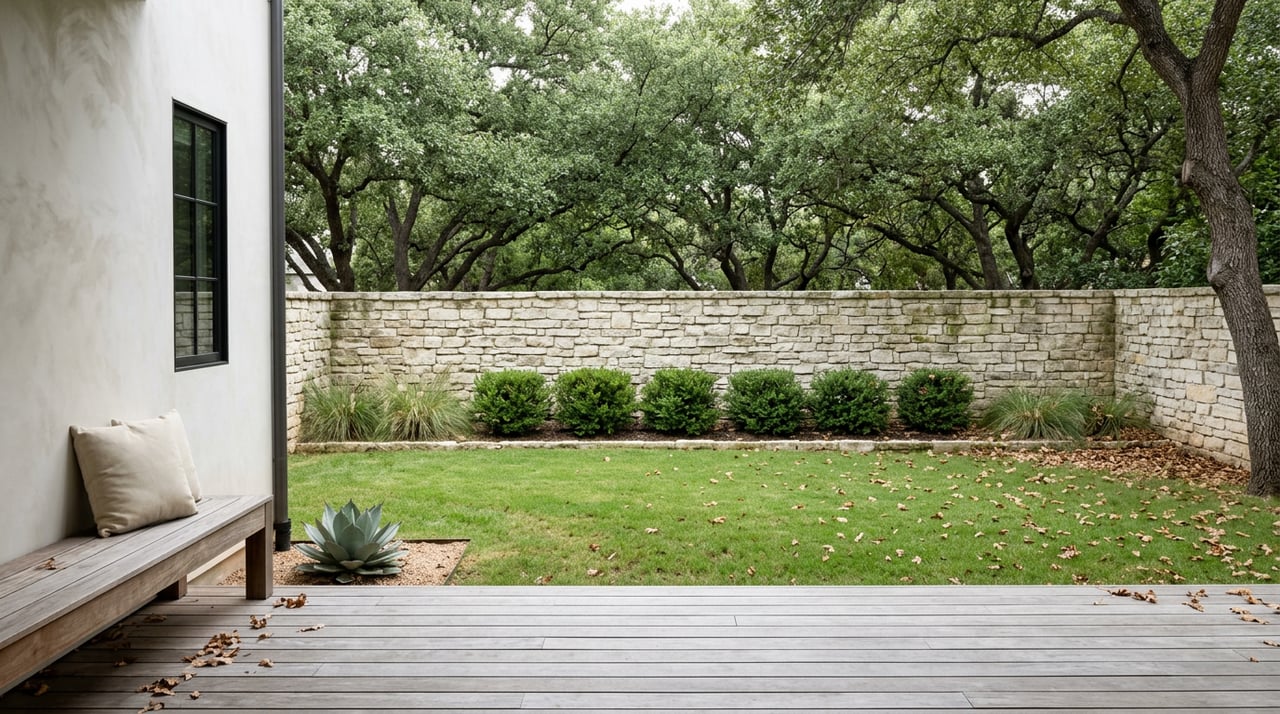
Fully fenced yards are less common on large Hill Country lots than in urban subdivisions. Confirm what the fencing situation is for any property you're seriously considering. Many properties in Rough Hollow and other gated communities have HOA rules around fencing materials and placement — know what you can and can't add before you make an offer.
Fully fenced yards are less common on large Hill Country lots than in urban subdivisions. Confirm what the fencing situation is for any property you're seriously considering. Many properties in Rough Hollow and other gated communities have HOA rules around fencing materials and placement — know what you can and can't add before you make an offer.
Features worth prioritizing when relocating with animals
- Fully fenced yard, or a lot where fencing can be added within HOA guidelines
- Single-story layout or good main-level access if you have older pets or animals with joint issues
- Proximity to a trailhead or green space — in Lake Travis, many neighborhoods have direct trail access that becomes part of a daily routine
- Covered outdoor space that gives pets a shaded area to be outside during warmer months without overheating
FAQs
How long does it typically take for pets to adjust after a move to Lake Travis?
Most dogs settle into a new home within two to four weeks, especially when their daily routine — feeding times, walks, and sleep locations — stays consistent. Cats typically take a bit longer and benefit from a gradual introduction to the full space rather than immediate access to the whole house. Animals moving from a denser urban environment to a larger Lake Travis property with more outdoor space often adapt faster than owners expect once the initial transition period passes.
Are there good veterinary options near Lake Travis?
Yes — the Lake Travis and Lakeway corridor has several full-service veterinary clinics serving the area, along with emergency veterinary services accessible from most neighborhoods within a 20-to-30-minute drive. Identifying your preferred clinic and scheduling an introductory visit within the first month of arrival is the best way to establish a relationship before an urgent situation arises.
What should I know about water safety for dogs at Lake Travis?
Lake Travis is generally excellent for dogs who enjoy swimming, but blue-green algae (cyanobacteria) blooms can occur during warm months — typically late summer and fall — particularly in coves and areas with slow water movement. These blooms are toxic and can be difficult to spot. The Lower Colorado River Authority monitors and posts advisories when blooms are detected, so checking current conditions before lake swims during warmer months is a straightforward precaution.
Relocate to Lake Travis With Travis Real Estate
Moving to the Lake Travis area is a significant decision, and the details — lot size, fencing, trail access, neighborhood character — matter differently when pets are part of the picture. We know this market well, and we work with buyers and sellers across Lakeway, Rough Hollow, Spicewood, and Bee Cave every day.
If you're planning a move to Lake Travis and want guidance on finding the right home for your family and your animals, we're here to help. Reach out to us — learn more about our work in the Lake Travis area and let's start a conversation. Search Lake Travis, TX homes for sale today!
If you're planning a move to Lake Travis and want guidance on finding the right home for your family and your animals, we're here to help. Reach out to us — learn more about our work in the Lake Travis area and let's start a conversation. Search Lake Travis, TX homes for sale today!